UNDERSTANDING THE PATTERNS
Finding your way forward.
A thoughtful, trauma-informed approach to anxiety, depression, trauma, relationships, and life's transitions.
Therapy that looks beyond the symptoms.
Sometimes you know something isn't working, even when you can't explain exactly why. You may find yourself caught in familiar reactions, struggling with anxiety, feeling disconnected in your relationships, or navigating changes that leave you questioning what comes next.
At Path & Presence Therapy, I believe meaningful change comes from understanding the whole person—not just the symptoms that bring someone to counseling. Our thoughts, emotions, past experiences, relationships, and physical responses are connected, and the patterns we develop to cope with life don't always continue serving us.
My approach is warm, collaborative, and trauma-informed, combining established therapeutic methods, specialized techniques, and mind-body practices. Rather than following a single formula, we'll explore what's happening beneath the surface and identify the tools that best support your needs, goals, and comfort level.

EXPLORE MY APPROACH
The right approach isn't one-size-fits-all.
Neither is your journey.
Anxiety, Depression & Feeling Overwhelmed
-
Anxiety and depression don't always look the way we expect. Sometimes they show up as constant overthinking, perfectionism, exhaustion, emotional numbness, or feeling disconnected from the things that once brought us joy. These experiences can overlap, creating patterns that become increasingly difficult to interrupt.
My approach focuses on understanding what's contributing to those patterns while developing practical ways to respond differently.
-
Approach: Cognitive Behavioral Therapy (CBT)
Constant worrying, replaying conversations, anticipating the worst, and questioning your decisions can leave you feeling mentally exhausted. These thought patterns may become so automatic that it's difficult to recognize how much they're influencing your emotions and behavior.
Using CBT, we'll explore the connection between your thoughts, feelings, and actions. By learning to recognize unhelpful thinking patterns, question assumptions, and develop more flexible responses, you can begin to feel less controlled by worry and more confident navigating uncertainty.
-
Approach: Mind-Body & Nervous-System Awareness
Anxiety isn't experienced only in our thoughts. It can also appear as physical tension, restlessness, a racing heart, irritability, or feeling constantly on edge. For some people, prolonged stress has the opposite effect, leaving them feeling numb, disconnected, or emotionally shut down.
Through grounding techniques, breathing exercises, body awareness, and other regulation strategies, we'll work on recognizing these responses before they become overwhelming. These practices can help you develop greater awareness of stress signals and identify ways to feel more settled and present.
-
Approach: Internal Family Systems (IFS)-Informed Therapy
Perfectionism, people-pleasing, self-doubt, and difficulty setting boundaries often develop for understandable reasons. You may have learned that being responsible, avoiding conflict, or constantly striving to do more helped you feel accepted or secure.
IFS-informed work encourages us to approach these patterns with curiosity rather than criticism. By exploring what these different parts of yourself may be trying to protect, we can develop greater self-compassion and create room for healthier boundaries, choices, and expectations.
-
Approach: CBT, Behavioral Activation & Mind-Body Practices
Depression can make even familiar routines feel exhausting. As motivation decreases, people often withdraw from activities, relationships, and experiences that previously provided a sense of connection or purpose. Unfortunately, that withdrawal can reinforce feelings of sadness, isolation, and disconnection.
Using CBT and behavioral activation strategies, we'll explore small, manageable ways to reconnect with meaningful activities and daily routines. When appropriate, movement and time outdoors may complement this work by supporting mood, reducing stress, and creating opportunities to practice being present.
The goal isn't to force positivity or pretend everything is fine. It's to develop practical tools that help you feel more connected to yourself and more capable of navigating difficult moments.
Trauma, PTSD & the Impact of Past Experiences
-
Trauma can influence how we think, feel, connect with others, and respond to situations long after an experience has ended. Sometimes those effects are obvious, such as distressing memories or heightened fear. Other times, they appear through avoidance, emotional withdrawal, difficulty trusting others, or reactions we don't fully understand.
Trauma-informed therapy recognizes that insight alone isn't always enough. We may understand what happened while still struggling with how it affects us.
-
Approach: Accelerated Resolution Therapy (ART)
Distressing memories can sometimes continue to trigger strong emotional or physical responses, even when we recognize that the experience is in the past. Certain situations, sounds, or reminders may bring those feelings back unexpectedly.
ART is a structured trauma-focused approach that combines guided eye movements with imagery-based techniques to help clients work with distressing memories and potentially reduce their emotional intensity.
ART shares some features with EMDR, particularly the use of eye movements, but they are distinct treatments with different protocols. EMDR has a more extensive research base, while ART has shown promising early results.
ART may provide an option for processing difficult experiences without needing to repeatedly describe every detail aloud. The intention isn't to erase the memory, but to help change how distressing it feels in the present.
-
Approach: Nervous-System Awareness & Grounding Techniques
Trauma-related stress can leave you feeling hyperaware of your surroundings, easily startled, physically tense, or unable to relax. Others experience periods of emotional numbness, disconnection, or shutting down when situations become overwhelming.
Through mind-body awareness and grounding practices, we'll explore how stress shows up physically and emotionally. Learning to notice these responses can help you recognize triggers, understand your reactions, and develop strategies for returning to a greater sense of stability.
This work can also help establish a foundation for trauma processing by strengthening your ability to recognize and manage distress.
-
Approach: IFS-Informed Therapy
Difficult experiences can shape the beliefs we hold about ourselves. You may find yourself questioning past decisions, feeling responsible for things outside your control, or criticizing how you reacted during an experience.
IFS-informed therapy offers a compassionate way to explore these internal responses. Rather than treating self-criticism, avoidance, or emotional protection as personal failures, we can examine how those patterns developed and what purpose they may have served.
Understanding these responses can help reduce internal conflict and create a more accepting, supportive relationship with yourself.
-
Approach: CBT-Based Strategies & Gradual Skill Building
Avoiding certain conversations, situations, places, or emotions can provide temporary relief from distress. Over time, however, avoidance may make it harder to feel confident, connected, or comfortable participating in everyday life.
Using CBT-based strategies, we'll explore the relationship between triggers, thoughts, emotions, and avoidance behaviors. Together, we can build coping skills and identify manageable steps toward engaging with situations that have become difficult.
The pace of this work is important. Trauma treatment should be collaborative, responsive to your needs, and grounded in your sense of safety and readiness.
The goal is to help the past have less influence over your present choices, relationships, and sense of self.
Relationships & Couples Therapy
-
Relationships are often where our most familiar emotional patterns become visible. We may struggle to communicate what we need, react defensively when we feel criticized, or repeat the same disagreements without understanding why nothing seems to change.
Whether you're navigating challenges with a partner or exploring relationship patterns individually, therapy can help you better understand what happens beneath the surface of those interactions.
-
Approach: Gottman-Informed Couples Therapy
Sometimes a conversation begins with a simple concern and quickly becomes an argument. One person may feel unheard, while the other feels criticized or misunderstood. Over time, even small disagreements can create frustration and emotional distance.
Gottman-informed interventions help couples recognize communication patterns that contribute to conflict. Together, we'll work on expressing needs more clearly, listening with greater understanding, and approaching difficult conversations in ways that encourage collaboration rather than defensiveness.
The goal isn't to agree about everything. It's to communicate in a way that allows both people to feel respected and understood.
-
Approach: Gottman-Informed Pattern Recognition & Emotional Awareness
Many couples find themselves caught in familiar cycles. One partner may seek reassurance or connection while the other withdraws to avoid conflict. The more one person pursues, the more the other pulls away, leaving both feeling increasingly disconnected.
Therapy helps us step away from deciding who is right and begin examining the interaction itself. Using Gottman-informed strategies, we'll identify recurring conflict patterns, explore what each person may be experiencing, and practice healthier ways of responding.
Recognizing the cycle creates an opportunity to interrupt it before another conversation follows the same frustrating path.
-
Approach: IFS-Informed Therapy & Mind-Body Awareness
Our reactions within relationships are sometimes influenced by experiences that happened long before the current partnership. Fear of rejection, difficulty trusting others, a need for reassurance, or discomfort with vulnerability may be connected to earlier relationships or learned ways of protecting ourselves.
IFS-informed work can help individuals explore these emotional patterns with curiosity and compassion. Mind-body awareness can also help recognize when a conversation triggers physical or emotional reactions that make communication more difficult.
By understanding what happens internally during moments of conflict or disconnection, individuals and couples can develop greater awareness and more intentional responses.
-
Approach: Gottman-Informed Relationship Building
Emotional distance doesn't always develop because of one major event. Sometimes it grows gradually through unresolved disagreements, competing responsibilities, missed opportunities for connection, or the feeling that a relationship has become more about managing life than enjoying it together.
Gottman-informed therapy emphasizes strengthening friendship, rebuilding emotional intimacy, practicing meaningful communication, and learning how to repair after difficult moments.
We'll explore what helps each partner feel valued, supported, and connected, while developing practical ways to strengthen the relationship outside of therapy.
The goal is not to create a relationship without challenges. It's to build the understanding, trust, and communication skills that can help you navigate those challenges together.
CLINICAL COLLABORATION & REFERRALS
Thoughtful referrals begin with understanding the person, the clinical need, and the approach most likely to help.
Clinical Specialties & Referral Fit
-
Presenting concerns: Persistent anxiety, rumination, perfectionism, excessive worry, depressed mood, emotional exhaustion, avoidance, and difficulty managing everyday stress.
Anxiety and depression often involve overlapping cognitive, behavioral, and physiological processes. Clients may recognize that their thoughts or behaviors are contributing to distress while struggling to change patterns that have become automatic.
My approach draws primarily from Cognitive Behavioral Therapy (CBT), behavioral activation principles, and emotional regulation strategies. Treatment may focus on identifying the relationship between thoughts, emotions, and behaviors; reducing avoidance; increasing engagement in meaningful activities; and developing more flexible coping responses.
For individuals experiencing chronic stress or difficulty recognizing emotional responses, I may also incorporate grounding and body-awareness practices.
Referral fit: Adults experiencing anxiety or depressive symptoms who would benefit from collaborative outpatient psychotherapy focused on symptom reduction, improved functioning, and sustainable behavioral change.
-
Presenting concerns: Intrusive memories, trauma reminders, avoidance, hypervigilance, emotional reactivity, shame, difficulties with trust, and distress associated with previous experiences.
Trauma-related symptoms can persist even when individuals have substantial insight into the experiences that contributed to them. Clients may recognize that a threat is no longer present while continuing to experience significant emotional or physiological responses.
My trauma-informed approach considers the connection between earlier experiences, present-day symptoms, emotional regulation, and interpersonal functioning.
When clinically appropriate, I incorporate Accelerated Resolution Therapy (ART), a structured intervention using guided eye movements and imagery-based techniques to address distressing memories.
I also integrate CBT-based strategies, grounding, and emotional regulation skills according to the individual's needs and readiness for trauma processing.
Referral fit: Adults experiencing trauma-related symptoms or PTSD who are appropriate for outpatient treatment and may benefit from a combination of stabilization, practical coping strategies, and trauma-focused work.
-
Presenting concerns: Recurring conflict, ineffective communication, emotional disconnection, trust difficulties, relational distress, and challenges navigating relationship patterns.
Relationship difficulties frequently involve recurring interactions in which each person's responses reinforce the other's distress. Individuals may experience difficulty expressing needs, managing conflict, or recognizing how previous experiences influence their current relationships.
In couples counseling, I use Gottman-informed interventions to support communication, emotional connection, conflict management, and relationship repair.
Treatment may involve helping partners recognize unhelpful interaction cycles, understand the concerns beneath recurring disagreements, and develop more constructive ways of responding to one another.
I also incorporate individual emotional awareness and regulation strategies when appropriate, particularly when personal experiences or stress responses contribute to relationship difficulties.
Referral fit: Couples seeking support with communication, connection, trust, or recurring conflict, as well as individuals wishing to better understand their relationship patterns.
The appropriateness of conjoint therapy is assessed carefully when coercion, intimidation, violence, or other safety concerns are present.
-
Presenting concerns: Adjustment difficulties, career or relationship transitions, grief and loss, changes in family roles, uncertainty about identity, low self-worth, and difficulty establishing boundaries.
Not every individual seeking therapy presents with a specific psychiatric diagnosis. Life transitions can challenge existing coping strategies, relationships, and personal identity, sometimes resulting in significant emotional distress or difficulty functioning.
My approach combines CBT principles, Internal Family Systems (IFS)-informed exploration, and mind-body awareness to help clients better understand their responses to change.
Treatment may focus on examining personal expectations, recognizing protective patterns, strengthening emotional awareness, developing healthier boundaries, and identifying choices that align with the individual's values.
Referral fit: Adults navigating meaningful life changes who would benefit from greater self-understanding, improved coping strategies, and support developing a clearer sense of direction.
Treatment Approaches & Clinical Evidence
-
Clinical applications: Anxiety, depression, rumination, avoidance, perfectionism, and unhelpful behavioral patterns.
Cognitive Behavioral Therapy (CBT) examines how thoughts, emotions, and behaviors influence one another. Through structured, collaborative interventions, clients learn to identify patterns that contribute to distress and develop alternative responses.
Depending on the presenting concern, treatment may include cognitive restructuring, behavioral strategies, coping-skills development, and techniques for reducing avoidance.
Behavioral activation principles may be particularly useful for individuals experiencing depression, reduced motivation, or withdrawal from meaningful activities. By gradually increasing engagement in manageable and personally meaningful activities, clients can begin interrupting behavioral cycles that reinforce depressive symptoms.
Evidence base: CBT is strongly supported by research and major treatment guidelines for anxiety and depression. Behavioral activation is also recognized as an effective treatment approach for depression.
Supporting resources:
-
Clinical applications: Trauma-related distress, intrusive memories, emotional triggers, and certain presentations involving persistent responses to difficult experiences.
Accelerated Resolution Therapy (ART) combines guided eye movements with imagery-based techniques intended to help individuals process distressing memories and reduce the emotional intensity associated with them.
ART shares certain elements with Eye Movement Desensitization and Reprocessing (EMDR), particularly the use of guided eye movements while working with distressing material. However, the approaches have different protocols and should not be considered interchangeable.
EMDR has an extensive research base and is recommended in the 2023 VA/DoD Clinical Practice Guideline for PTSD, alongside Cognitive Processing Therapy and Prolonged Exposure.
ART has shown encouraging preliminary results. A 2024 systematic review identified five studies involving 337 enrolled participants and reported improvements in PTSD symptoms following ART. However, the authors emphasized the need for additional high-quality research, and the VA/DoD guideline found insufficient evidence to recommend for or against ART.
I incorporate ART when appropriate to the client's clinical presentation, treatment goals, and readiness. It is one available component of my trauma-informed approach rather than a universal intervention.
Evidence base: EMDR has strong guideline-level support for PTSD. ART has a smaller, developing research base with promising findings and important limitations.
Supporting resources:
-
Clinical applications: Self-criticism, perfectionism, emotional avoidance, internal conflict, protective coping patterns, and difficulties with emotional regulation.
IFS-informed therapy provides a framework for understanding the different internal responses individuals develop throughout their lives.
A client may experience one part of themselves that seeks connection while another responds to vulnerability through withdrawal or self-protection. Rather than viewing these patterns simply as problems to eliminate, IFS-informed work encourages curiosity about how they developed and what function they may serve.
This can help clients develop greater self-compassion, recognize competing emotional needs, and respond with more flexibility.
I also incorporate nervous-system awareness and mind-body practices to help individuals recognize how stress may appear through muscle tension, changes in breathing, heightened alertness, restlessness, or emotional withdrawal.
Grounding, breathing, and present-moment awareness can complement psychotherapy by helping clients identify their emotional and physical responses.
Evidence base: Research on IFS-based interventions is emerging. A 2026 randomized pilot study evaluated an IFS-based group intervention for PTSD, offering preliminary findings while highlighting the need for further research.
Concepts associated with Polyvagal Theory may provide a useful language for discussing stress responses, but aspects of the theory remain scientifically contested. I use these concepts cautiously rather than presenting them as conclusively established explanations of therapeutic change.
Supporting resource:
-
Clinical applications: Relationship distress, recurring conflict, communication difficulties, emotional disconnection, and challenges rebuilding trust.
Gottman-informed interventions draw from research examining relationship patterns, emotional connection, conflict, and the behaviors associated with relationship stability and distress.
In clinical practice, these concepts may help couples recognize destructive interaction patterns, communicate their needs more effectively, strengthen positive interactions, and develop healthier strategies for resolving disagreements.
Treatment may include exploring recurring cycles, strengthening friendship and emotional intimacy, improving conflict repair, and building greater understanding between partners.
The broader couples therapy literature supports meaningful improvements in relationship satisfaction and functioning.
A 2026 systematic review found modest empirical support for several specific couples therapy models, including Gottman Method Couples Therapy, while identifying the need for larger studies and independent replication.
Evidence base: Couples therapy has meaningful evidence supporting its effectiveness. The evidence for individual treatment models varies, and ongoing research is needed to clarify their comparative effectiveness.
Supporting resources:
Referrals & Care Coordination
-
Path & Presence Therapy offers two outpatient treatment formats designed to accommodate different client preferences and clinical needs.
Telehealth Counseling
Telehealth is available to eligible clients physically located in Utah at the time of service. Sessions are supported through Sessions Health, the practice's electronic health record, scheduling, and client portal system.
Virtual therapy may be particularly helpful for individuals who experience barriers related to travel, work schedules, or geographic location.
Clinical appropriateness depends on factors such as privacy, technological access, treatment needs, client safety, and the ability to participate effectively.
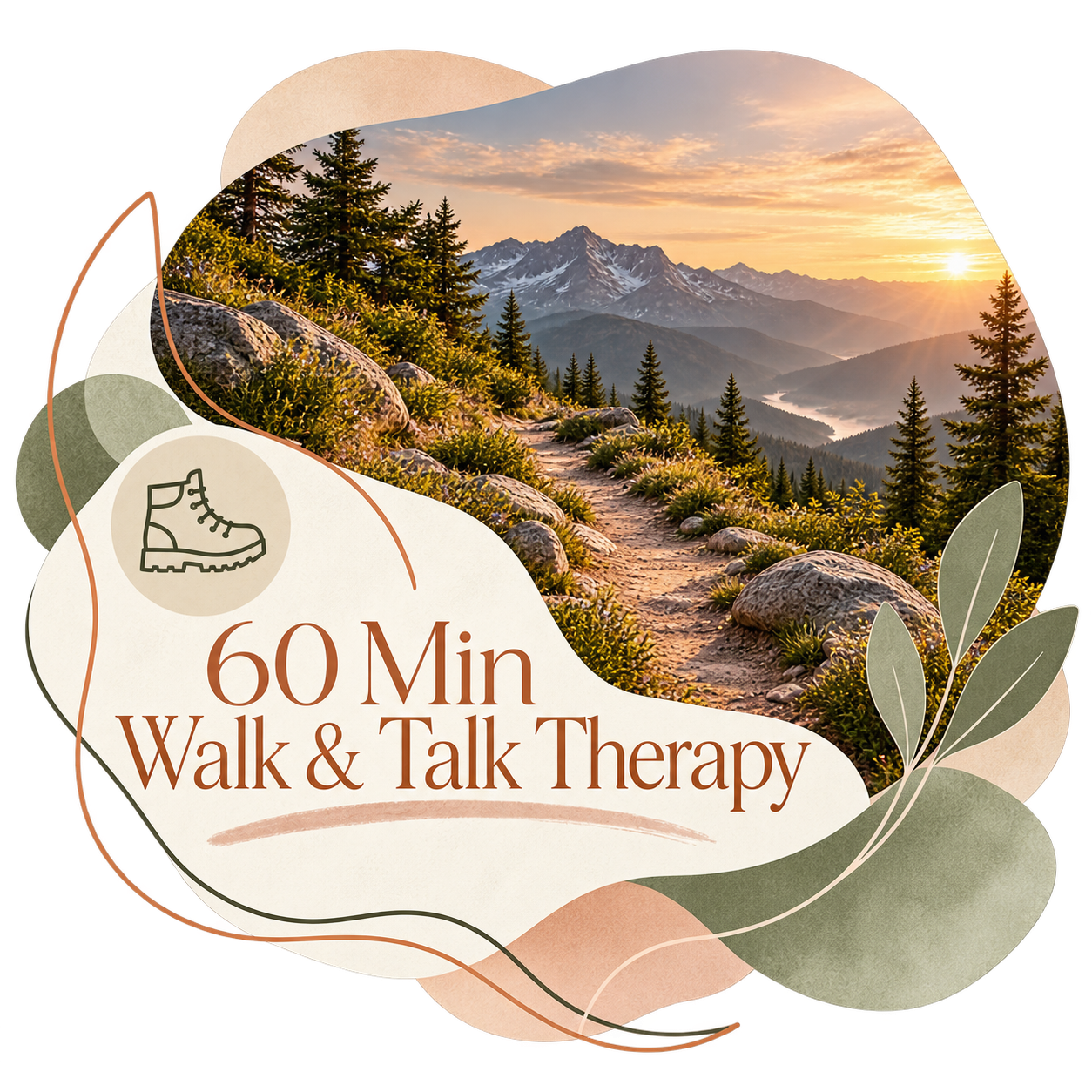
Walk & Talk Therapy
Walk & Talk Therapy is available in the Park City area and integrates psychotherapy with gentle movement in outdoor settings.
This format may appeal to clients who feel more comfortable speaking while walking, experience difficulty sitting still during traditional sessions, or value the opportunity to incorporate movement and nature into therapeutic work.
Research supports physical activity as a potentially helpful intervention for depressive symptoms. A 2024 systematic review and network meta-analysis involving 218 studies found that exercise, including walking or jogging, was associated with improvements in depression.
Research on nature exposure has also identified potential benefits for stress and repetitive negative thinking.
These findings support the potential value of movement and nature, although research specifically evaluating Walk & Talk psychotherapy remains more limited.
Walking involves rhythmic, alternating physical movement, but this should not be equated with the structured eye-movement procedures used in ART or EMDR. Walking has not been established as producing equivalent trauma-processing effects.
Clinical considerations: Outdoor therapy requires attention to physical accessibility, environmental conditions, privacy, safety, and individual preferences. Treatment format is determined collaboratively according to clinical appropriateness.
Supporting resources:
-
Path & Presence Therapy provides outpatient psychotherapy and is not an emergency, inpatient, or crisis-stabilization service.
Referral appropriateness depends on more than an individual's diagnosis. Relevant considerations include current symptoms, functional impairment, clinical stability, safety concerns, available support systems, previous treatment experiences, and the individual's capacity to participate in outpatient care.
Clients experiencing acute psychiatric instability, immediate safety risks, or needs requiring intensive monitoring may benefit from emergency evaluation, specialized treatment, or a higher level of care.
For trauma-focused work, treatment planning also considers emotional regulation, readiness for processing distressing experiences, and whether additional stabilization is appropriate.
For couples counseling, I consider the safety and appropriateness of conjoint treatment, particularly when significant coercion, intimidation, violence, or other circumstances may prevent voluntary and safe participation.
My goal is to help individuals access treatment that is appropriate to their clinical needs, even when that means recommending an alternative service or treatment setting.
-
I welcome referrals and professional inquiries from therapists, psychiatrists, primary care providers, hospitals, behavioral health programs, and other professionals seeking outpatient counseling options for their clients.
Prospective clients may contact Path & Presence Therapy directly or access the online scheduling portal.
Sessions Health Scheduling Portal:
https://pathandpresencetherapy.sessionshealth.com/Phone: 435-776-5606
Email: Carina.nation@pathpresencetherapy.comReferring professionals are welcome to contact me with general questions about clinical fit, treatment approaches, or service availability.
When clinically relevant, useful referral information may include the primary reason for referral, presenting symptoms, previous treatment experiences, and factors that may influence the appropriate level of care.
However, detailed clinical histories and protected health information should be transmitted only through appropriate secure communication methods and with any consent or authorization required by law.
The general website contact form is intended for basic inquiries and should not be used to transmit confidential treatment records.
Submitting a referral does not automatically establish a therapeutic relationship or guarantee acceptance into treatment. Availability and clinical appropriateness will be determined through the intake process.
-
Effective coordination can be valuable when a client is receiving services from multiple professionals or transitioning between treatment settings.
With appropriate authorization, I welcome clinically relevant collaboration regarding treatment goals, symptom presentation, safety considerations, or the need for additional services.
This can be particularly helpful when outpatient therapy is provided alongside psychiatric medication management, primary care, or following discharge from a higher level of treatment.
Collaboration should remain purposeful and respect the client's preferences, confidentiality, and therapeutic relationship.
Privacy and Authorization
Utah law provides additional protections for confidential communications between mental health therapists and their clients. Information sharing must comply with applicable HIPAA requirements, Utah Code § 58-60-114, and other relevant confidentiality provisions.
For couples therapy, additional consideration may be necessary regarding jointly maintained records, individual disclosures, and applicable authorization requirements.
Insurance and Payment
Path & Presence Therapy participates with a variety of commercial and Medicare Advantage insurance plans.
Network participation, medical necessity, coverage for specific services, and individual out-of-pocket responsibilities vary according to the client's insurance plan.
Insurance verification does not guarantee payment, and coverage should be confirmed before treatment begins.
Commitment to Continuity
I value collaborative relationships that prioritize the client's needs. When a referral is appropriate, my goal is to help create a thoughtful transition into care. When another treatment setting or provider may be a better match, I recognize the importance of clear communication and appropriate referral recommendations.
The quality of a referral is not simply measured by whether an appointment is scheduled, but by whether the individual is connected with services suited to their needs.
Let's Connect
A thoughtful referral can make a meaningful difference in someone's willingness and ability to engage in therapy.
If you are working with an individual or couple who may benefit from my approach, I welcome the opportunity to discuss general clinical fit, treatment options, and availability.
Carina Nation, CMHC
Path & Presence Therapy
Park City, Utah
Phone: 435-776-5606
Email: Carina.nation@pathpresencetherapy.com
Schedule Through Sessions Health
Good care begins with understanding. Strong connections help make it possible.


START HEALING TODAY